Conclusion: Making an Informed Decision About Your Lipoma Removal
Choosing between local and general anaesthesia for your lipoma removal in London is an important decision that should be based on your specific circumstances, the characteristics of your lipoma, and your personal preferences. At Skin Surgery Clinic London, we believe that informed patients make the best decisions about their healthcare, which is why we provide comprehensive consultations and personalised recommendations for each case.
The majority of lipoma removals can be safely and comfortably performed under local anaesthesia, offering the benefits of minimal downtime, lower costs, and fewer side effects. However, general anaesthesia provides valuable options for larger lipomas, multiple removals, or patients with specific concerns about remaining conscious during the procedure.
Key considerations to remember when planning your lipoma removal include:
- The size, location, and depth of your lipoma will significantly influence the recommended anaesthesia approach
- Your medical history and any previous experiences with anaesthesia should be thoroughly discussed with your surgeon
- Both anaesthesia options are safe when administered by qualified professionals in appropriate clinical settings
- Recovery expectations differ between local and general anaesthesia, affecting your return to normal activities
- Comprehensive aftercare is essential regardless of which anaesthesia option you choose
Our Harley Street specialists are committed to providing exceptional care throughout your lipoma removal journey, from initial consultation through to complete recovery. We utilise the latest techniques in both surgical removal and anaesthesia administration to ensure your experience is as comfortable and stress-free as possible.
If you’re considering lipoma removal in London and have questions about anaesthesia options, we invite you to schedule a consultation with our expert team. Contact Skin Surgery Clinic London today to discuss your specific needs and develop a personalised treatment plan that prioritises both your safety and comfort.
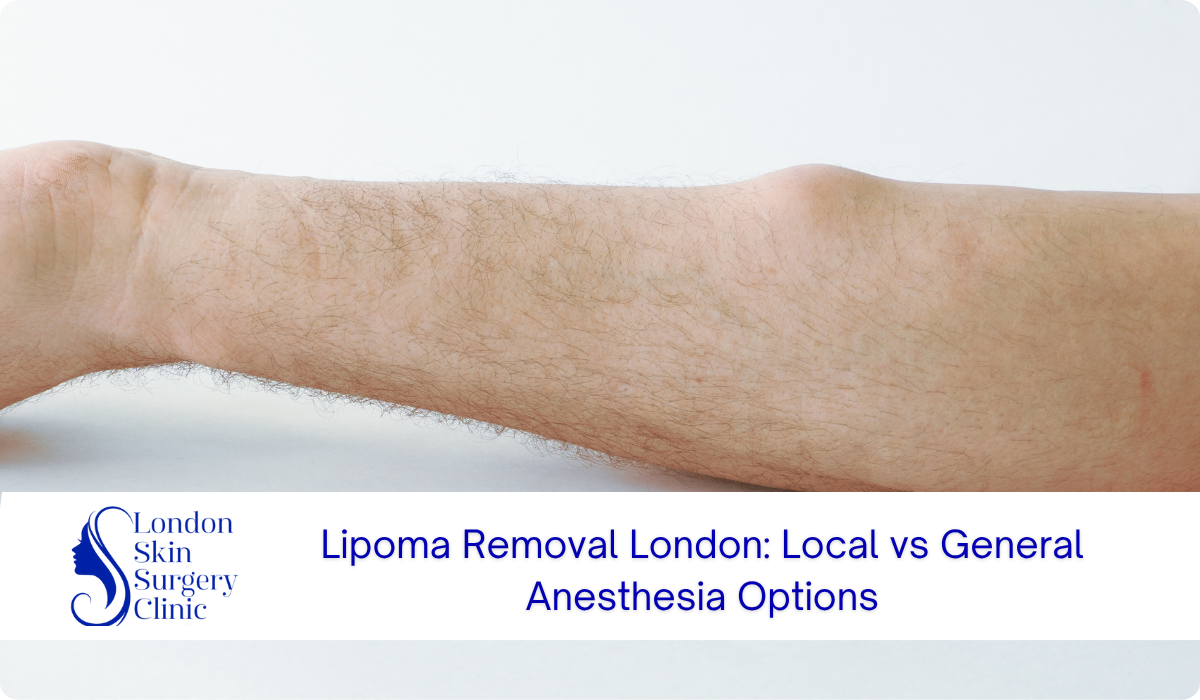
Lipoma Removal London: Local vs General Anaesthesia Options
When considering lipoma removal in London, understanding your anaesthesia options is crucial for a comfortable and stress-free experience. At Skin Surgery Clinic London, we offer comprehensive lipoma removal services with various anaesthesia options tailored to your specific needs. Lipomas—benign fatty tissue growths that develop under the skin—can cause discomfort, affect your appearance, or restrict movement depending on their location and size. While these soft, doughy lumps are typically harmless, many patients in London seek professional removal for both cosmetic and functional reasons.
Our London-based specialists provide expert lipoma removal using both local and general anaesthesia techniques, ensuring your procedure is as comfortable as possible. Whether you’re concerned about a small lipoma or require removal of multiple or larger growths, understanding the anaesthesia options available will help you make an informed decision about your treatment plan.
Table of Contents
- Understanding Lipomas: What They Are and Why Remove Them
- Local Anaesthesia for Lipoma Removal: Process and Benefits
- When Is General Anaesthesia Recommended for Lipoma Surgery?
- Comparing Anaesthesia Options: Safety Profiles and Recovery
- What Should You Expect During Your Anaesthesia Consultation?
- Pain Management Techniques Before, During and After Surgery
- Choosing the Right London Clinic for Your Lipoma Removal
- Post-Procedure Care: Managing Recovery After Anaesthesia
Understanding Lipomas: What They Are and Why Remove Them
Lipomas are benign (non-cancerous) soft tissue tumours composed of fat cells that develop just beneath the skin. They typically feel soft and rubbery to the touch and can move slightly when pressed. Most commonly found on the neck, shoulders, back, abdomen, arms, and thighs, lipomas can range from pea-sized to several centimetres in diameter.
While lipomas are generally harmless, there are several reasons why patients in London seek professional removal:
- Cosmetic concerns: Visible lipomas, especially on exposed areas like the neck or arms, can affect self-confidence
- Physical discomfort: Larger lipomas or those located near joints or pressure points may cause pain or restrict movement
- Growth or change: Lipomas that grow rapidly or change in appearance should be evaluated to rule out other conditions
- Diagnostic confirmation: While most lipomas are benign, surgical removal allows for pathological examination to confirm diagnosis
At our Harley Street clinic, we specialise in minimally invasive lipoma excision techniques that prioritise both effective removal and aesthetic outcomes. The type of anaesthesia used depends on several factors including lipoma size, location, and patient preference—making it an important consideration in your treatment plan.
Local Anaesthesia for Lipoma Removal: Process and Benefits
Local anaesthesia is the most common approach for lipoma removal in London clinics, particularly for smaller to medium-sized lipomas. This technique involves injecting an anaesthetic medication directly into the area surrounding the lipoma, numbing only that specific region while you remain fully conscious.
The process typically follows these steps:
- The skin around the lipoma is cleaned and prepared
- A fine needle is used to inject the local anaesthetic (typically lidocaine)
- After waiting 5-10 minutes for the area to become numb, the surgeon proceeds with the removal
- You may feel pressure or movement during the procedure, but should not experience pain
- The lipoma is excised through a small incision, and the wound is closed with sutures
The benefits of choosing local anaesthesia for your lipoma removal in London include:
- Same-day procedure: Local anaesthesia allows for outpatient treatment with minimal preparation
- Faster recovery: You can typically return to normal activities within 24-48 hours
- Lower cost: Local anaesthesia is more cost-effective than general anaesthesia
- Reduced risks: Fewer side effects compared to general anaesthesia
- No fasting required: You can eat and drink normally before the procedure
At our private lipoma removal clinic in London, we use advanced techniques to make local anaesthesia administration as comfortable as possible, including pre-numbing the skin and using the finest needles available.
When Is General Anaesthesia Recommended for Lipoma Surgery?
While local anaesthesia is suitable for most lipoma removals, there are specific scenarios where general anaesthesia may be recommended or necessary for your procedure in London. General anaesthesia induces a temporary state of unconsciousness, ensuring you’re completely asleep during the surgery.
General anaesthesia is typically recommended in the following situations:
- Large lipomas: Lipomas exceeding 10cm in diameter often require more extensive surgery
- Deep-seated lipomas: Those located beneath muscle layers or near vital structures
- Multiple lipomas: When removing several lipomas in a single session
- Complex locations: Lipomas near the face, neck, or other sensitive areas
- Patient anxiety: For patients with severe anxiety about remaining conscious during surgery
- Medical considerations: Certain medical conditions may necessitate general anaesthesia
The process involves pre-operative assessment, administration of anaesthetic medications through an IV, and continuous monitoring throughout the procedure. A specialised anaesthetist will be present throughout your surgery to ensure safety and optimal dosing.
At our Harley Street lipoma specialists clinic, we work with highly qualified anaesthetists who specialise in outpatient procedures. If general anaesthesia is recommended for your lipoma removal, we’ll provide comprehensive information about preparation requirements, including fasting guidelines and medication adjustments prior to your scheduled surgery date.
Comparing Anaesthesia Options: Safety Profiles and Recovery
When considering lipoma removal in London, understanding the differences between local and general anaesthesia can help you make an informed decision about your procedure. Both options have distinct safety profiles and recovery implications that should be considered.
Safety Considerations
Local Anaesthesia:
- Lower risk of systemic complications
- Minimal impact on respiratory and cardiovascular systems
- Rare allergic reactions (approximately 1 in 10,000 cases)
- Suitable for patients with certain medical conditions that might preclude general anaesthesia
General Anaesthesia:
- Slightly higher risk of complications, though still very safe in healthy individuals
- Requires more comprehensive pre-operative assessment
- May cause temporary side effects like nausea, sore throat, or confusion
- Administered and monitored by specialist anaesthetists for maximum safety
Recovery Comparison
Local Anaesthesia Recovery:
- Immediate recovery with no “groggy” feeling
- Can typically drive home after the procedure (though we recommend having someone accompany you)
- Return to normal activities within 24 hours
- Only the surgical site requires healing time
General Anaesthesia Recovery:
- Initial recovery in a dedicated recovery area (typically 1-2 hours)
- Cannot drive for at least 24 hours post-procedure
- May experience fatigue for 24-48 hours
- Gradual return to normal activities over 2-3 days
Our London clinic prioritises patient safety regardless of the anaesthesia type chosen. We conduct thorough pre-operative assessments and maintain state-of-the-art monitoring equipment to ensure optimal outcomes for all lipoma removal procedures.
What Should You Expect During Your Anaesthesia Consultation?
Before undergoing lipoma removal at our London clinic, you’ll have a dedicated anaesthesia consultation to determine the most appropriate option for your specific case. This important pre-operative assessment ensures your safety and comfort during the procedure.
During your anaesthesia consultation, you can expect:
Medical History Review
- Discussion of any previous surgeries and anaesthesia experiences
- Review of current medications, supplements, and allergies
- Assessment of medical conditions that might affect anaesthesia choices
- Family history of anaesthesia-related complications
Physical Assessment
- Vital signs measurement (blood pressure, heart rate, oxygen levels)
- Airway examination to identify any potential challenges
- BMI calculation and general health evaluation
- Specific assessments related to the lipoma location
Personalised Anaesthesia Planning
- Discussion of recommended anaesthesia type based on your lipoma’s characteristics
- Explanation of risks and benefits specific to your situation
- Opportunity to ask questions and express preferences
- Information about fasting requirements if applicable
Our Harley Street specialists take a patient-centred approach to anaesthesia planning, considering not only medical factors but also your comfort level and preferences. We understand that surgical procedures can cause anxiety, and our anaesthesia team is committed to addressing all your concerns before your lipoma removal.
This consultation typically occurs during your initial surgical assessment, allowing for comprehensive treatment planning in a single visit at our London clinic.
Pain Management Techniques Before, During and After Surgery
Effective pain management is a cornerstone of comfortable lipoma removal at our London clinic. We employ a multi-faceted approach that begins before your procedure and continues through your recovery period, ensuring minimal discomfort throughout your treatment journey.
Pre-Operative Pain Management
- Topical numbing creams: Applied 30-60 minutes before local anaesthetic injection to minimise needle discomfort
- Pre-emptive analgesics: Oral pain medications may be recommended before your procedure
- Anxiety management: Mild sedatives available for anxious patients, even with local anaesthesia
- Cold therapy: Cooling the area briefly before injection to reduce discomfort
Intra-Operative Techniques
- Advanced injection methods: Using ultra-fine needles and slow injection techniques to minimise pain
- Buffered anaesthetics: Special formulations that reduce the burning sensation of local anaesthesia
- Conscious sedation options: For longer procedures, providing relaxation while maintaining consciousness
- Long-acting local anaesthetics: Providing numbness that extends into the early recovery period
Post-Operative Pain Control
- Tailored medication plans: Prescription or over-the-counter options based on procedure complexity
- Cold therapy protocols: Scheduled application of cold packs to reduce swelling and discomfort
- Wound care optimisation: Techniques that minimise pain during dressing changes
- Follow-up support: Direct access to our clinical team for pain management concerns
Our pain-free surgical techniques have been refined through years of experience in minimally invasive lipoma removal. We understand that each patient experiences pain differently, and our London specialists will work with you to create a personalised pain management strategy that addresses your specific needs and concerns.
Choosing the Right London Clinic for Your Lipoma Removal
Selecting the right clinic for your lipoma removal in London is crucial for ensuring optimal results and a positive experience. With numerous options available across the capital, it’s important to consider several key factors before making your decision.
Specialist Expertise
- Look for surgeons with specific experience in lipoma removal techniques
- Check for relevant qualifications and professional memberships
- Consider clinics that specialise in dermatological surgery rather than general cosmetic practices
- Seek surgeons who regularly perform lipoma excisions of varying complexity
Anaesthesia Options and Safety
- Ensure the clinic offers both local and general anaesthesia options when appropriate
- Verify that qualified anaesthetists are involved in general anaesthesia cases
- Check for modern monitoring equipment and emergency protocols
- Ask about the clinic’s approach to minimising anaesthesia discomfort
Facility Standards
- Confirm CQC registration and compliance with healthcare regulations
- Look for clinics with dedicated surgical facilities rather than treatment rooms
- Consider the cleanliness and professionalism of the environment
- Check if same-day lipoma surgery is available if that’s your preference
Patient Experience
- Read reviews specifically mentioning lipoma removal experiences
- Ask about consultation processes and how thoroughly your options will be explained
- Consider the responsiveness and helpfulness of clinic staff
- Enquire about post-operative support and follow-up care
At Skin Surgery Clinic London, we specialise in outpatient lipoma procedures with a focus on patient comfort and minimal scarring. Our Harley Street location offers the convenience of central London access combined with the expertise of specialists who perform lipoma removals daily. We provide transparent pricing, comprehensive consultations, and a range of anaesthesia options tailored to your specific needs.
Post-Procedure Care: Managing Recovery After Anaesthesia
Proper post-procedure care is essential for a smooth recovery after lipoma removal, regardless of the anaesthesia type used. Understanding what to expect and how to care for yourself following surgery will help ensure optimal healing and minimise complications.
Recovery After Local Anaesthesia
- Immediate effects: The numbing sensation typically lasts 2-4 hours after the procedure
- Activity guidelines: Rest for the remainder of the day, but normal activities can usually resume the following day
- Driving considerations: Most patients can drive home after local anaesthesia, but having someone accompany you is recommended
- Medication timing: Begin taking recommended pain relief before the local anaesthetic wears off completely
Recovery After General Anaesthesia
- Initial recovery period: Expect to spend 1-2 hours in our recovery area before discharge
- Common side effects: Temporary nausea, sore throat, or dizziness may occur
- Activity restrictions: Avoid driving, alcohol, and important decision-making for 24 hours
- Hydration: Drink plenty of fluids to help clear anaesthesia from your system
Wound Care After Lipoma Removal
- Dressing management: Keep the surgical site clean and dry for the first 48 hours
- Showering guidelines: Follow specific instructions about when you can shower or bathe
- Signs of infection: Monitor for increased pain, redness, swelling, or discharge
- Suture care: Attend follow-up appointments for suture removal if non-dissolving stitches were used
When to Seek Medical Attention
- Excessive bleeding that soaks through dressings
- Severe pain not controlled by prescribed medications
- Fever above 38°C or chills
- Persistent nausea or vomiting after general anaesthesia
- Increasing redness, warmth, or swelling around the incision site
Our London clinic provides comprehensive aftercare instructions tailored to your specific procedure and anaesthesia type. We also offer 24-hour telephone support for all patients following lipoma removal, ensuring you have expert guidance throughout your recovery process.
Frequently Asked Questions
Is lipoma removal painful with local anaesthesia?
Lipoma removal with local anaesthesia is typically not painful during the procedure. You may feel a brief sting during the initial anaesthetic injection, but we use techniques like topical numbing creams and ultra-fine needles to minimise this discomfort. Once the area is numb, you’ll only feel pressure or movement but no pain. Most patients report minimal discomfort during recovery, which can be managed with over-the-counter pain medications.
How long does lipoma removal surgery take?
The duration of lipoma removal surgery depends on the size, location, and number of lipomas being removed. Typically, a single small to medium lipoma removal takes 30-45 minutes under local anaesthesia. Larger lipomas or multiple removals may take 1-2 hours. Procedures requiring general anaesthesia usually take longer due to the additional time needed for anaesthesia administration and recovery.
What are the risks of general anaesthesia for lipoma removal?
While general anaesthesia is very safe, potential risks include temporary side effects like nausea, vomiting, sore throat, confusion, and dizziness. Rare but more serious risks include allergic reactions, breathing difficulties, and cardiovascular complications. These risks are minimised through thorough pre-operative assessment, modern monitoring equipment, and supervision by qualified anaesthetists. For most routine lipoma removals, local anaesthesia offers a safer alternative with fewer risks.
How much does lipoma removal cost in London?
The cost of lipoma removal in London typically ranges from £350-£2,500 depending on several factors. Small lipomas removed under local anaesthesia start from £350-£750, while larger or multiple lipomas may cost £800-£1,500. Procedures requiring general anaesthesia generally range from £1,500-£2,500 due to additional facility and specialist fees. Most private clinics offer detailed pricing during consultation based on your specific case.
Can I eat before lipoma removal with local anaesthesia?
Yes, you can eat normally before lipoma removal with local anaesthesia. Unlike general anaesthesia, which requires fasting for 6-8 hours before surgery, local anaesthesia does not affect your digestive system or consciousness. We actually recommend having a light meal before your appointment to help prevent lightheadedness. However, if your procedure includes sedation alongside local anaesthesia, fasting guidelines may apply.
How soon can I return to work after lipoma removal?
Most patients can return to work within 24-48 hours after lipoma removal with local anaesthesia, particularly for desk jobs or light duties. For procedures performed under general anaesthesia, you’ll typically need 2-3 days before returning to work. If your job involves heavy lifting or strenuous activity, you may need to wait 7-14 days regardless of anaesthesia type. The exact timeline depends on the size and location of the lipoma, as well as your individual healing process.