Facial Lipoma Removal London: Expert Surgical Care for Cosmetic Concerns
Facial lipomas require specialised surgical attention due to their visible location and the complex anatomy of the face. At Skin Surgery Clinic London, our specialists combine technical precision with aesthetic awareness to remove facial lipomas while minimising scarring and preserving facial harmony. This comprehensive guide explores the unique considerations of facial lipoma removal, from diagnosis through to recovery, helping you understand what to expect from this specialised procedure in London.
Table of Contents
- Understanding Facial Lipomas: Causes and Characteristics
- Why Facial Lipoma Removal Requires Specialized Care
- Diagnostic Process for Facial Lipomas in London Clinics
- Advanced Techniques for Facial Lipoma Surgery
- What Are the Risks of Facial Lipoma Removal?
- Recovery and Aftercare Following Facial Lipoma Surgery
- Choosing a Facial Lipoma Specialist in London
- Cost Considerations for Facial Lipoma Removal
Understanding Facial Lipomas: Causes and Characteristics
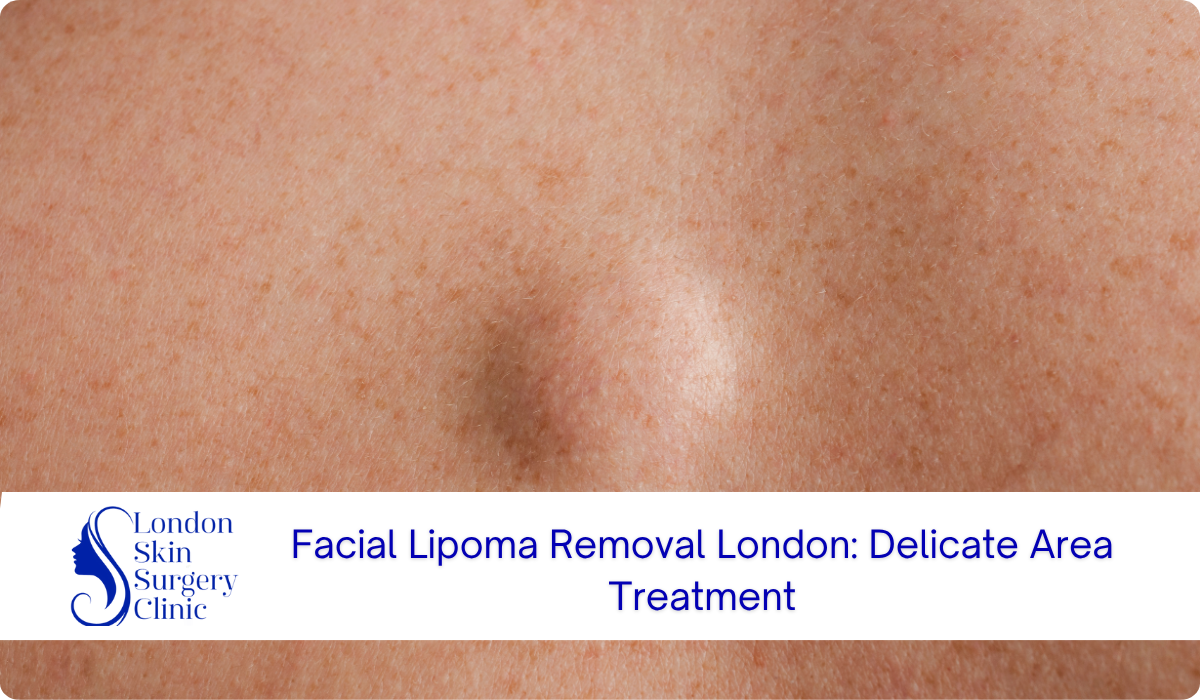
Facial lipomas are benign (non-cancerous) soft tissue growths that develop beneath the skin on the face. These slow-growing fatty lumps typically feel soft and rubbery when touched and can move slightly under pressure. While facial lipomas are generally painless, their presence in such a visible area can cause significant cosmetic concerns and, in some cases, functional issues depending on their location and size.
The exact cause of facial lipomas remains unclear, though several factors may contribute to their development. Genetic predisposition plays a significant role, with some individuals having a family history of lipomas. Other potential contributing factors include minor trauma to the face, obesity, and certain medical conditions like adiposis dolorosa or Gardner’s syndrome. Facial lipomas can appear anywhere on the face but are commonly found on the forehead, cheeks, and neck.
Unlike lipomas elsewhere on the body, facial lipomas require particular attention due to the area’s cosmetic importance and complex anatomy. These growths typically range from 1-3cm in diameter, though they can grow larger if left untreated. While most facial lipomas remain stable in size, some may gradually enlarge over time, potentially causing asymmetry or distortion of facial features. Early assessment by a specialist is essential for proper diagnosis and treatment planning.
Why Facial Lipoma Removal Requires Specialized Care
Facial lipoma removal demands specialized expertise due to the face’s intricate anatomy and aesthetic significance. The facial region contains a complex network of nerves, blood vessels, and muscles in close proximity, making surgical intervention more challenging than lipoma removal from other body areas. A facial lipoma specialist must possess detailed knowledge of facial anatomy to navigate these structures safely, minimising the risk of damage to vital facial nerves that control expression and sensation.
The aesthetic outcome of facial lipoma surgery is paramount. Even small scars or minor asymmetry can be highly noticeable on the face, potentially causing psychological distress. Specialised facial surgeons employ techniques that prioritise cosmetic outcomes, carefully planning incision placement along natural skin creases or hairlines to conceal scarring. They also utilise tissue-sparing approaches that preserve facial contours and symmetry.
Additionally, facial tissue has unique characteristics compared to other body areas. The skin is thinner, more mobile, and has varying tension lines that must be considered during surgery. Specialised care includes customised approaches based on the specific facial region involved, as techniques appropriate for forehead lipomas may differ from those used for cheek or chin lipomas. At our London clinic, we emphasise the importance of tailored treatment plans that consider both the technical aspects of lipoma removal and the patient’s aesthetic goals for optimal outcomes in this delicate area.
Diagnostic Process for Facial Lipomas in London Clinics
The diagnostic journey for facial lipomas at London clinics begins with a comprehensive consultation. During this initial assessment, a specialist will take a detailed medical history, including information about when you first noticed the lump, any changes in its size or characteristics, and whether it causes pain or discomfort. Family history is also relevant, as lipomas can have a genetic component. The specialist will examine the facial growth, assessing its size, mobility, texture, and relationship to surrounding structures.
While many facial lipomas can be diagnosed through clinical examination alone, imaging studies may be recommended for confirmation or surgical planning. Ultrasound is typically the first-line imaging modality, as it can effectively distinguish lipomas from other soft tissue masses without radiation exposure. For deeper or more complex cases, MRI might be employed to provide detailed information about the lipoma’s exact location, size, and relationship to vital facial structures. This precision imaging is particularly valuable when planning surgery in anatomically complex facial regions.
In some cases, a fine needle aspiration (FNA) or core biopsy may be performed to confirm the diagnosis, particularly if there are any atypical features. This involves extracting a small sample of cells or tissue from the lump for laboratory analysis. While most facial lipomas are benign, this step ensures accurate diagnosis and rules out other conditions that might require different management approaches. At our London clinic, we utilise the latest diagnostic technologies to ensure precise characterisation of facial lipomas, enabling us to develop the most appropriate treatment plan for each patient’s unique situation.
Advanced Techniques for Facial Lipoma Surgery
Modern facial lipoma surgery employs several advanced techniques that prioritise both effective removal and optimal cosmetic outcomes. Minimally invasive approaches have revolutionised facial lipoma removal, allowing for smaller incisions and reduced tissue disruption. One such technique is the punch biopsy method, where a small circular incision is made, followed by careful dissection and removal of the lipoma through this limited opening. This approach is particularly valuable for smaller facial lipomas, resulting in minimal scarring and quicker recovery times.
For larger or more complex facial lipomas, endoscopic-assisted removal may be utilised. This technique involves making small incisions, often placed in concealed locations such as the hairline, through which a tiny camera (endoscope) and specialised instruments are inserted. The surgeon can visualise the lipoma and surrounding structures on a monitor while performing the removal, allowing for precise dissection with minimal external scarring. This approach is especially beneficial for lipomas in cosmetically sensitive areas of the face.
Another advanced technique is liposuction-assisted lipoma removal, which can be effective for larger, softer lipomas. After making a small incision, a cannula is inserted to break up and suction out the fatty tissue. This technique may be combined with direct excision to ensure complete removal. For facial lipomas near critical structures, surgeons may employ nerve monitoring systems during the procedure to prevent inadvertent damage to facial nerves. At our London skin surgery clinic, we carefully select the most appropriate technique based on the lipoma’s characteristics, location, and the patient’s aesthetic goals, ensuring optimal functional and cosmetic results.
What Are the Risks of Facial Lipoma Removal?
While facial lipoma removal is generally safe when performed by experienced specialists, patients should be aware of potential risks. Infection remains a possibility with any surgical procedure, though strict adherence to sterile techniques minimises this risk. Signs of infection include increased redness, warmth, swelling, or discharge from the surgical site. Patients are typically prescribed preventative antibiotics or provided with clear wound care instructions to reduce infection risk.
Scarring is a particular concern with facial surgery. Though skilled surgeons employ techniques to minimise visible scarring—such as placing incisions along natural skin creases or hairlines—some degree of scarring is inevitable. The extent depends on factors including the lipoma’s size and location, the surgical technique used, and individual healing characteristics. Rarely, abnormal scarring such as hypertrophic scars or keloids may develop, particularly in predisposed individuals.
Nerve damage represents a more serious potential complication of facial lipoma surgery due to the face’s complex neural network. Temporary numbness or altered sensation around the surgical site is relatively common and typically resolves within weeks to months. However, permanent nerve damage, though rare, can occur and might result in localised numbness or, more significantly, weakness of facial muscles. The risk increases with lipomas located near major facial nerve branches or those that have grown around nerve structures. Bleeding and haematoma formation are additional risks, though meticulous surgical technique and appropriate postoperative care help minimise these complications. At our London clinic, we thoroughly discuss all potential risks during the consultation process, ensuring patients can make fully informed decisions about their treatment.
Recovery and Aftercare Following Facial Lipoma Surgery
Recovery following facial lipoma surgery typically progresses through several phases, with most patients experiencing a relatively straightforward healing process. Immediately after the procedure, you can expect some swelling, bruising, and mild discomfort around the surgical site. These symptoms are usually most pronounced during the first 48-72 hours and gradually subside thereafter. Cold compresses applied intermittently can help manage swelling, while prescribed or recommended pain relief medications effectively control discomfort. Most patients can return to light activities within 1-2 days, though strenuous exercise should be avoided for at least 1-2 weeks.
Wound care is crucial for optimal healing and cosmetic outcomes. Your surgeon will provide specific instructions, which typically include keeping the incision site clean and dry for the first 24-48 hours. After this period, gentle cleansing with mild soap and water is usually permitted. Stitches may be absorbable or require removal, typically 5-7 days after surgery depending on the location and extent of the procedure. Surgical tape or dressings might be applied to support the wound and minimise tension during the early healing phase.
Long-term scar management begins once the incision has fully closed, usually around 2 weeks post-surgery. Silicone-based scar products, either as gels or sheets, have proven effective in improving scar appearance when used consistently. Sun protection is essential, as newly formed scars are particularly vulnerable to UV damage, which can lead to permanent darkening or discolouration. Follow-up appointments allow your surgeon to monitor healing progress and address any concerns. While most facial lipoma removals heal without complications, it’s important to contact your surgeon promptly if you notice signs of infection, unusual swelling, or opening of the wound. With proper aftercare, most patients achieve excellent cosmetic results with scars that fade significantly over 6-12 months.
Choosing a Facial Lipoma Specialist in London
Selecting the right specialist for facial lipoma removal is crucial for achieving optimal results in this aesthetically sensitive area. When researching potential surgeons in London, prioritise those with specific expertise in facial surgery and lipoma removal. Look for specialists who are board-certified in plastic surgery, dermatologic surgery, or facial plastic surgery, as these credentials indicate advanced training in facial procedures. Many qualified facial lipoma specialists will have membership in professional organisations such as the British Association of Plastic, Reconstructive and Aesthetic Surgeons (BAPRAS) or the British Association of Dermatologists (BAD).
Experience specifically with facial lipoma surgery is paramount. During consultations, don’t hesitate to ask potential surgeons about their experience with similar cases, including how many facial lipoma removals they perform annually. Request to see before-and-after photographs of previous patients with facial lipomas similar to yours, paying particular attention to scar placement and overall aesthetic outcomes. A specialist confident in their skills will be transparent about their experience and results.
The consultation process itself can reveal much about a surgeon’s approach. A thorough specialist will take time to understand your concerns, examine the lipoma carefully, and discuss various treatment options rather than immediately recommending surgery. They should clearly explain the procedure, potential risks, expected recovery, and realistic outcomes specific to your case. The specialist should welcome your questions and never pressure you into making immediate decisions. Additionally, consider the clinic’s facilities and whether they have access to advanced surgical equipment for precise facial procedures. Patient reviews and testimonials can provide valuable insights into others’ experiences with the specialist and clinic. By carefully evaluating these factors, you can identify a London-based facial lipoma specialist who combines technical expertise with an aesthetic eye for this delicate procedure.
Cost Considerations for Facial Lipoma Removal
The cost of facial lipoma removal in London varies considerably based on several key factors. Location plays a significant role, with Harley Street and other prestigious central London clinics typically commanding higher fees than those in outer London areas. The complexity of the procedure substantially impacts pricing—lipomas in challenging facial locations such as near the eyes, ears, or involving deeper tissues require more technical skill and time, increasing costs accordingly. Similarly, larger lipomas or those requiring more extensive reconstruction after removal generally incur higher fees.
In London’s private healthcare market, facial lipoma removal typically ranges from £800 to £3,000. This price variation reflects differences in the surgeon’s expertise and reputation, clinic facilities, and the specific surgical technique employed. Minimally invasive approaches or endoscopic techniques may cost more due to the specialised equipment required, though they often result in less scarring and faster recovery. It’s important to understand what’s included in the quoted price—some clinics offer comprehensive packages covering the consultation, procedure, follow-up appointments, and revision surgery if needed, while others price these components separately.
When evaluating cost, consider that facial lipoma removal is rarely covered by private health insurance when performed for cosmetic reasons. However, if the lipoma causes functional problems or there’s concern about its nature, some insurance policies may provide coverage. Always check with your provider before proceeding. Many London clinics offer payment plans to make treatment more accessible, allowing costs to be spread over several months. While price is an important consideration, it shouldn’t be the primary factor in your decision-making process. The surgeon’s expertise with facial procedures, their aesthetic approach, and the clinic’s reputation should take precedence when selecting a provider for this delicate procedure. Remember that choosing based solely on cost may lead to suboptimal results, particularly in such a visible area as the face.
Frequently Asked Questions
Are facial lipomas dangerous or cancerous?
Facial lipomas are benign (non-cancerous) fatty tissue growths. They pose no inherent health risk in most cases. However, any new or changing growth should be evaluated by a specialist to confirm the diagnosis, as some malignant conditions can initially resemble lipomas. Once properly diagnosed, facial lipomas are considered safe, though removal may be recommended for cosmetic reasons or if they cause functional issues.
How long is the recovery period after facial lipoma removal?
Recovery from facial lipoma removal typically involves 1-2 days of limited activity, with most patients returning to work within 3-5 days depending on their job requirements. Initial swelling and bruising generally subside within 7-10 days. Stitches are usually removed or dissolve within 5-7 days. Complete healing with minimal visible scarring continues over 6-12 months, though this varies based on individual healing factors and the surgical technique used.
Will my facial lipoma return after surgical removal?
When a facial lipoma is completely removed using proper surgical techniques, recurrence rates are very low (less than 5%). Complete excision of the lipoma with its capsule significantly reduces the chance of regrowth. However, patients with multiple lipomas or certain genetic conditions may develop new lipomas in different locations over time. Follow-up appointments help monitor for any signs of recurrence.
Can facial lipomas be removed without surgery?
Non-surgical options for facial lipomas are limited. While steroid injections may reduce the size of some lipomas, they rarely eliminate them completely and are generally less effective for facial lipomas. Liposuction techniques can remove the fatty content but may leave the capsule behind, increasing recurrence risk. For complete and reliable removal of facial lipomas, surgical excision remains the gold standard treatment, especially when cosmetic outcomes are important.
How visible will the scar be after facial lipoma removal?
Scarring after facial lipoma removal depends on several factors including the lipoma’s size and location, surgical technique used, and individual healing characteristics. Skilled facial surgeons minimize visible scarring by placing incisions along natural skin creases, hairlines, or other concealed locations when possible. Most scars fade significantly within 6-12 months, becoming thin white lines that are much less noticeable. Proper aftercare including sun protection and scar management products can optimize the final appearance.
Is facial lipoma removal covered by insurance or NHS?
NHS coverage for facial lipoma removal is typically limited to cases where the lipoma causes significant functional problems, pain, or when there’s uncertainty about the diagnosis. Purely cosmetic removal is rarely covered by the NHS. Private health insurance policies vary considerably—some may cover removal if medically necessary but exclude cosmetic procedures. Always check with your specific insurance provider regarding coverage details and required documentation before proceeding with treatment.